
Measure what people look at, miss and visually prioritise.
Eye tracking helps reveal how visual attention moves through campaigns, websites, products, packaging, environments and journeys.
Neurofactor uses eye tracking in neuromarketing, UX and consumer neuroscience research to understand what people see, miss and visually prioritise before they explain what they noticed.
Eye tracking for neuromarketing, UX and visual attention research.
Not sure if eye tracking is enough? Start with the research question →Eye tracking shows where people look. Other methods can explain what it means.
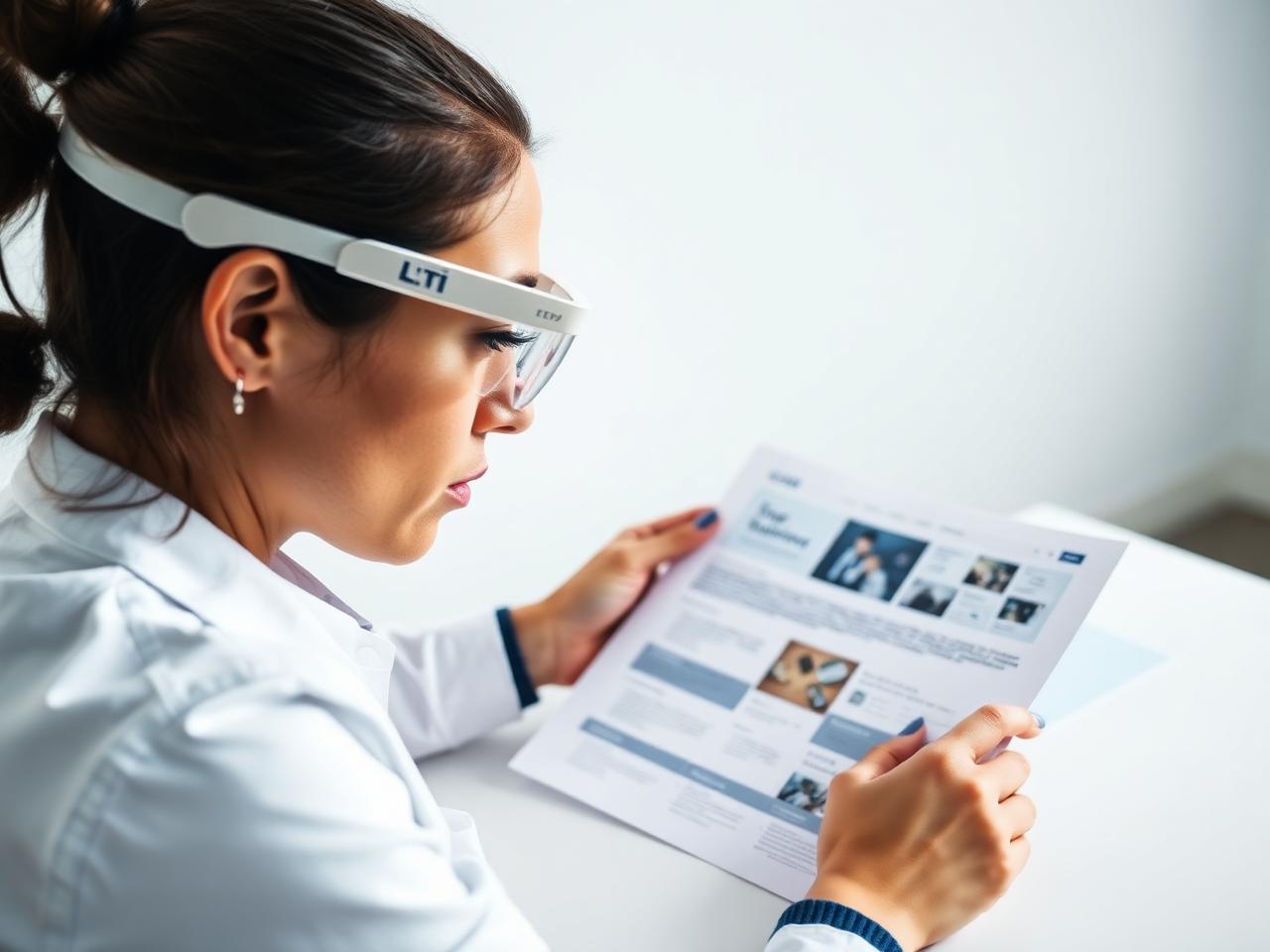
Eye tracking shows what people actually look at.
Designs, campaigns, websites and environments often assume that visible elements are seen. Eye tracking tests that assumption. By measuring gaze, fixations, scan paths and areas of interest, it can help reveal what people look at, what they miss, what they return to and how visual attention moves over time.
Eye tracking does not automatically prove why someone looked, what they understood or whether they liked it. It becomes stronger when combined with EEG, association research, surveys, behavioural observation or business data.
Being visible is not the same as being seen.
What is eye tracking?
Eye tracking is a research method that measures where people look, how long they look and how their gaze moves across a stimulus, interface, product, package, environment or journey.
In neuromarketing, UX and consumer neuroscience research, eye tracking can help interpret visual attention, scan patterns, missed elements and visual hierarchy. It is especially useful when the research question depends on whether people actually see the elements that matter.
Eye tracking measures visual attention, not emotion or intent by itself.
- Measures gaze and visual attention
- Records where people look, how long and how attention moves
- Used across campaigns, sites, apps, packaging, retail, dashboards, signage, environments and journeys
- Shows whether key elements are seen, missed, revisited or visually deprioritised
What eye tracking can help measure.
Eye tracking makes visual attention measurable. It can show where people look, how attention moves, which elements receive gaze and which elements are missed or visually deprioritised.
Gaze location
Where someone looks on a page, screen, package, product, shelf, environment or journey.
It shows whether attention goes toward the elements that matter.
Improve placement, contrast, layout, hierarchy, routing or visual cues.
Fixations
Moments where gaze remains on a specific area long enough to indicate visual attention.
Fixations help identify which elements attract or hold attention.
Improve messages, claims, CTAs, navigation, product features or visual hierarchy.
Scan paths
The sequence in which someone visually moves through a stimulus or environment.
Scan paths show whether the visual journey follows the intended order.
Improve page structure, campaign flow, packaging hierarchy, store layout, dashboard design or wayfinding.
Areas of interest
Predefined zones such as a logo, headline, CTA, price, claim, navigation item, warning, product feature or sign.
Help compare whether specific elements receive attention.
Improve key element placement, visual priority, contrast or content structure.
Time to first fixation
How long it takes before someone first looks at a key element.
If important elements take too long to attract gaze, they may be missed or noticed too late.
Improve hierarchy, placement, contrast, layout or visual cueing.
Dwell time
How long someone looks at a specific element or area.
Dwell time helps show which elements hold attention longer.
Compare creative versions, packaging elements, content blocks, product claims or interface sections.
Revisits
How often someone returns to an element or area after looking away.
Revisits can indicate continued attention, confusion, comparison or importance.
Improve clarity, order, information architecture or choice design.
Missed elements
Elements that are visible but receive little or no gaze.
A visible message, CTA, claim or sign may fail if people do not look at it.
Move, simplify, emphasise, redesign or remove elements.
Visual hierarchy
The order and strength with which visual elements attract attention.
Determines whether the design guides people toward the right information.
Improve layout, contrast, size, spacing, grouping, positioning or cueing.
Attention flow over time
How gaze develops across a video, page, route, journey or experience.
Attention may shift, drop, return or move away before the key moment appears.
Improve timing, sequence, pacing, message order or experience flow.
Eye tracking makes visual attention measurable.
Looked at is not the same as noticed, understood or believed.
Eye tracking can show that an element received gaze. That is valuable, but it is not the whole story. Looking at something does not automatically mean someone noticed it consciously, understood it correctly, trusted it, liked it or acted on it. That is why Neurofactor treats eye tracking as part of a research design, not as a shortcut to certainty.
Looked at
Eye tracking can show that an element received gaze or fixation.
Logo, headline, CTA, claim, price, warning, navigation item, product feature, signage.
Noticed
Additional interpretation or supporting methods may help determine whether the element entered awareness or was remembered.
Recall questions, surveys, interviews, behavioural observation, task performance.
Understood or believed
Other methods are needed to test meaning, trust, comprehension, motivation or persuasion.
Association research, surveys, interviews, profiling, EEG, behavioural data, business data.
Eye tracking shows where attention goes. It does not explain the full response by itself.
What eye tracking can show, and what it cannot prove alone.
Eye tracking is powerful when the research question involves visual attention. It helps reveal what people look at, miss, revisit and visually prioritise. But gaze alone does not prove why people looked, what they felt or whether they will act.
- Where people look
- What they miss
- How long they look
- What they revisit
- Which areas draw attention
- How gaze moves over time
- Whether key elements are visually prioritised
- Why people looked
- Whether they understood
- Whether they liked or trusted it
- Whether they will act
- What they felt
- Whether the design will convert
Looking is not the same as noticing, understanding, trusting or acting.
When should you use eye tracking?
Use eye tracking when visual attention is part of the decision. It is especially useful when a campaign, website, interface, product, package, environment or journey depends on whether people actually see the elements that matter.
Visual hierarchy matters.
Does the design guide attention in the intended order?
Eye tracking can reveal whether priority elements are seen first.
Key information may be missed.
Are critical elements seen at all?
Missed-element analysis exposes blind spots in the layout.
A CTA, claim, logo or product feature needs attention.
Does the focal element receive gaze in time?
Time to first fixation and dwell time make this measurable.
A website, app or interface needs UX optimisation.
Do users find navigation, actions and task-critical elements?
Scan paths and AOIs guide interface and content decisions.
Packaging or shelf design needs comparison.
Which packaging elements are seen first or missed?
Eye tracking benchmarks visual performance between variants.
An ad, video or landing page needs attention analysis.
Where does attention rise, drop or shift?
Attention flow over time reveals the moments that work or fail.
A dashboard or form must guide users efficiently.
Are the right fields, alerts and steps seen at the right time?
AOI analysis supports error prevention and decision design.
You want to combine visual attention with EEG, surveys, behaviour or business data.
How does gaze connect to processing, meaning or behaviour?
Eye tracking integrates cleanly with the broader research design.
Use eye tracking when visual attention is part of the decision.
Discuss a research setupEye tracking can support any decision where visual attention matters.
If the decision depends on what people see, eye tracking can make the visual path measurable. It can be applied to campaigns, websites, apps, products, packaging, retail, signage, dashboards, public spaces, service journeys, museums and environments.
Advertising and video
Brand cues, product, key message and CTA in creative work.
Do viewers look at the brand cue, product, key message, proof point or CTA at the right moment?
Websites and landing pages
Headline, proof, CTA and conversion-critical information.
Do users look at the headline, proof points, CTA and conversion-critical information?
Apps and digital interfaces
Navigation, actions, feedback and task-critical elements.
Do users visually find navigation, actions, feedback, instructions and task-critical elements?
E-commerce and product pages
Product images, price, claims, reviews and purchase flow.
Do shoppers look at product images, price, claims, reviews, delivery information and purchase buttons?
Packaging and product claims
Front-of-pack design, claim hierarchy and shelf communication.
Which packaging elements are seen first, longest or missed entirely?
Retail shelves and store layouts
Products, signs, categories and shelf zones in store.
Which products, signs, categories or shelf zones attract attention?
Showrooms and premium experiences
Objects, cues and proof points in branded environments.
Which objects, details, cues or proof points attract attention during the experience?
Dashboards and forms
Fields, alerts, data points, instructions and next steps.
Do users look at the right fields, alerts, data points, instructions and next steps?
Public campaigns
Messages, senders, cues and risk information in public space.
Does the public notice the message, sender, behavioural cue, risk information or CTA?
Signage and wayfinding
Instructions, signs, route cues and decision points.
Do people look at instructions, signs, route cues or decision points when they need them?
Service journeys
Service instructions, touchpoints and environmental cues.
Which service instructions, touchpoints, screens or environmental cues are seen or missed?
Museum and visitor experiences
Routes, exhibits, object presentation and story moments.
Where do visitors look during the route, exhibit, object presentation or story moment?
Workplace and environment
Environmental cues, signage, screens and task zones.
Which environmental cues, signage, screens, zones or task elements receive attention?
If the decision depends on what people see, eye tracking can make the visual path measurable.
Eye tracking can be used on screens, products and in environments.
The right eye tracking setup depends on the research question, the stimulus and the context. Some questions are best answered on a screen. Others require a product, package, prototype, retail context, route or real environment.
Screen-based eye tracking
Websites, apps, landing pages, ads, videos, dashboards, forms, digital journeys.
The stimulus is screen-based and visual hierarchy, scanning or task flow matters.
Product and packaging eye tracking
Packages, labels, product displays, claims, shelf visuals, prototypes, physical materials.
Product visibility, claim hierarchy, packaging communication or shelf attention matters.
Real-world or environment eye tracking
Retail, showrooms, museums, service environments, wayfinding, public spaces, workplaces, routes and journeys.
The environment, route or physical context shapes visual attention.
The research question determines whether eye tracking should happen on a screen, with a product or in a real environment.
How Neurofactor uses eye tracking in research.
Neurofactor starts with the research question, not the equipment.
The team defines the stimulus, context, key areas of interest, target group, measurement setup and interpretation framework before collecting gaze data.
The goal is not to produce heatmaps. The goal is to translate visual attention data into better decisions.
- 1Define the research question.
- 2Select the stimulus, interface, product or environment.
- 3Define target group and task context.
- 4Define areas of interest.
- 5Design the eye tracking setup.
- 6Measure gaze, fixations and attention flow.
- 7Combine eye tracking with supporting data, then translate findings into recommendations.
The output is not a heatmap. It is interpreted evidence for better decisions.
Eye tracking becomes stronger with the right supporting methods.
Eye tracking shows what people looked at. Other methods can help explain what it means. The right combination depends on whether you need to understand processing, meaning, motivation, behaviour, target-group differences or business impact.
Eye tracking + EEG
Connecting what people looked at with how the moment was processed. Use when visual attention and real-time processing both matter.
Eye tracking + association research
Connecting visual attention with brand, product, message or concept associations.
Eye tracking + surveys or interviews
Comparing what people looked at with what they remember, explain or prefer afterwards.
Eye tracking + behavioural observation
Connecting gaze with visible actions, navigation, route behaviour or interaction.
Eye tracking + profiling
Understanding why different groups visually prioritise different elements.
Eye tracking + business data
Connecting visual attention to conversion, choice, dwell time, purchase, click or service outcomes.
Eye tracking shows what people looked at. Other methods can help explain what it means.
What you receive from eye tracking research.
The output is not just a heatmap. It is a decision-focused interpretation of visual attention. Neurofactor translates gaze data into practical recommendations for campaigns, websites, apps, products, packaging, retail, environments and service or digital journeys.
Gaze analysis
A clear view of where people looked across the stimulus, product, interface, package, environment or journey.
Fixation analysis
Which elements received visual attention and how attention was distributed.
Scan path analysis
The order in which people visually moved through the stimulus or environment.
Areas of interest
Attention to defined elements such as logos, headlines, CTAs, claims, products, signs or navigation points.
Time to first fixation
How quickly key elements were first seen.
Dwell time
How long people looked at specific elements or areas.
Missed element analysis
Visible elements that received little or no gaze.
Visual hierarchy diagnosis
Whether the design guides attention in the intended order.
Attention flow over time
How attention changes across a video, page, route, journey or experience.
Design or stimulus comparison
Comparison between creative versions, layouts, packages, products, pages, signs or environments.
Target-group differences
How different groups visually prioritise different elements.
Method-combination findings
Integration with EEG, association research, surveys, interviews, observation, profiling or business data.
Recommendations
Practical recommendations for hierarchy, clarity, cueing, layout, CTA visibility, packaging, product, route or environment.
The output is not just a heatmap. It is a decision-focused interpretation of visual attention.
Applied where visual attention shapes the outcome.
Eye tracking is most useful when the design, message, product, interface or environment depends on whether people actually see what matters. Relevant cases show where visual attention helped explain what was seen, missed or visually prioritised.
Websites, landing pages and digital journeys
Shows how visual attention can influence whether users find and process conversion-critical information.
Advertising and video research
Shows how eye tracking can reveal what is seen, missed or visually prioritised in creative work.
Packaging and product research
Shows how eye tracking can support product and packaging decisions.
Retail and environment research
Shows how visual attention can be measured in physical or simulated environments.
Museum, showroom or visitor experience research
Shows how eye tracking can support experience research when the visual journey matters.
See where visual attention research has supported better decisions.
Use cases show where eye tracking helped explain visual attention, not that gaze alone proves preference, trust or behaviour.
Want to know what people actually see?
If your campaign, website, package, product, interface, environment or journey depends on visual attention, eye tracking can help reveal what people look at, miss and visually prioritise. You do not need to know whether eye tracking is enough yet. Start with the research question. Neurofactor can help define the right setup.
Eye tracking shows where people look. Other methods can explain what it means.
Better visual decisions start by measuring what people actually see.