
Measure how people process experiences while they happen.
EEG measurement can help reveal real-time patterns in brain activity related to attention, cognitive processing, focus, engagement and approach/avoidance.
Neurofactor uses EEG in neuromarketing and consumer neuroscience research to understand how people respond to campaigns, products, websites, services, environments and experiences while they are happening.
EEG measurement for neuromarketing research.
Not sure if EEG is the right method? Start with the research question →You do not need to know the method yet. The research question defines the setup.
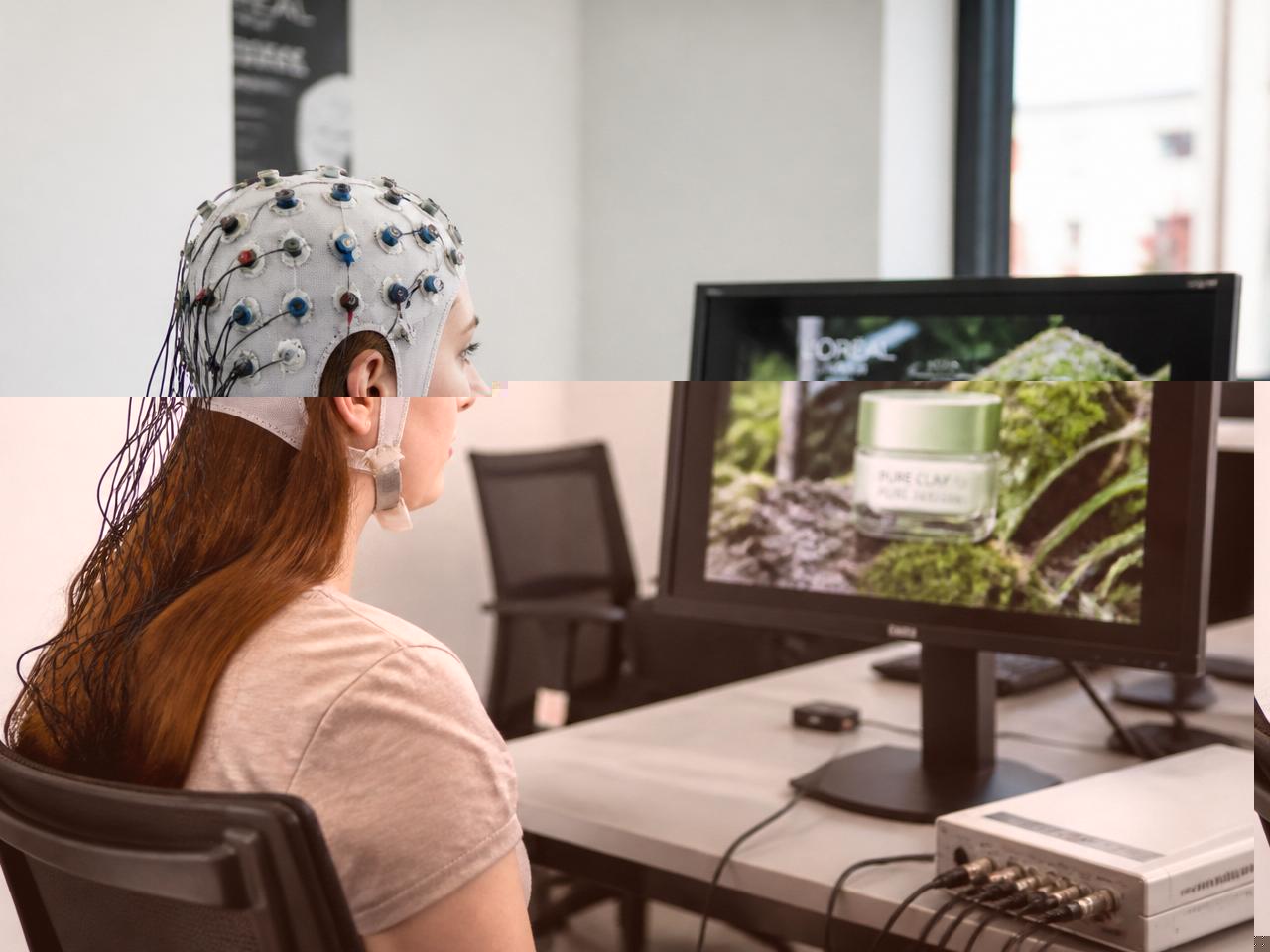
EEG helps measure response while the experience is happening.
Surveys, interviews and ratings can show what people say afterwards. EEG can help add a real-time layer by measuring patterns in brain activity while people experience a stimulus, product, service, environment or journey.
Depending on the research design, EEG can help interpret attention, cognitive processing, focus, engagement and approach/avoidance over time.
EEG does not read thoughts. It helps reveal response patterns that can be interpreted in context.
What is EEG measurement?
EEG, or electroencephalography, records electrical activity from the brain through sensors placed on the scalp.
In neuromarketing and consumer neuroscience research, EEG can help measure real-time patterns in brain activity while people experience campaigns, products, services, websites, environments or events.
Those patterns are interpreted in relation to the research question, stimulus, target group and context.
- EEG = electroencephalography
- Sensors placed on the scalp
- Patterns in brain activity
- Real-time measurement
- Interpreted in research context
- Used for neuromarketing and consumer neuroscience
What EEG can help measure.
Depending on the research design, EEG can help reveal patterns related to how people process an experience moment by moment. The interpretation always depends on the stimulus, target group and research setup.
Attention
Patterns related to where and when attention is engaged during a stimulus or experience.
If attention is not engaged at the right moment, the message, product or experience cannot land.
Adjust timing, placement, pacing or stimulus design.
Cognitive processing
Patterns related to how the brain processes information during the experience.
Heavy or fragmented processing can disrupt understanding, fluency and decision confidence.
Simplify message, structure, sequencing or visual hierarchy.
Focus
Patterns related to sustained mental focus over time.
Drops in focus reveal where an experience loses its grip.
Refine pacing, story arc, key-moment placement or stimulus length.
Mental engagement
Patterns interpreted in relation to active engagement with content or context.
Engagement separates passive exposure from real involvement.
Strengthen relevance, emotional anchors and signature moments.
Approach/avoidance
Frontal-asymmetry patterns often interpreted in research as approach or avoidance tendencies.
Reveals whether moments pull people in or push them away, before they explain it themselves.
Adjust tone, framing, imagery or moments that create friction.
Response dynamics over time
Patterns interpreted across the full timeline of an experience.
Static scores hide where the response actually rises, drops or peaks.
Identify the strongest and weakest moments and refine them.
Moments of friction or load
Patterns suggesting cognitive load, effort or disengagement.
Friction can quietly block conversion, comprehension or comfort.
Reduce complexity, clarify choices or simplify the moment.
Differences between stimuli
Comparing response patterns across multiple concepts, versions or variants.
Helps decide which concept has the stronger behavioural evidence.
Select the version that better fits the intended response.
Differences between target groups
Comparing response patterns across audiences or segments.
One target group may respond very differently from another.
Adapt the experience, message or design per profile.
EEG helps add the real-time processing layer behind what people are willing or able to explain.
What EEG does not measure.
EEG is powerful when used with care. The page must also be honest about what EEG cannot do, especially in a neuromarketing and consumer neuroscience context.
- Attention patterns
- Cognitive processing
- Focus
- Mental engagement
- Approach/avoidance
- Response dynamics over time
- Friction and load
- Differences between stimuli and groups
- Read thoughts or specific words
- Diagnose medical conditions in this context
- Prove exactly what someone feels
- Replace strategy, design or stakeholder judgement
- Work without a clear research design
- Deliver certainty or guarantees
EEG does not read thoughts. It helps reveal response patterns that can be interpreted in context.
When EEG measurement is useful.
EEG is most relevant when the research question depends on moment-by-moment response, not only on what people can explain afterwards. The teams below typically recognise this need.
People say they like a campaign, but it is unclear which moments create attention or friction.
Where in the experience does the response actually rise, drop or peak?
EEG can help reveal real-time attention and engagement dynamics.
A video, ad or storyline must work moment by moment.
Which seconds create focus, engagement, friction or avoidance?
EEG can help map response across the full timeline.
Multiple concepts, journeys or stimuli need to be compared.
Which version has the stronger behavioural response?
EEG can help compare response patterns across variants.
A premium experience needs evidence beyond preference or recall.
Does the experience actually create attention, engagement and approach response?
EEG can help add a response layer beyond self-report.
A real-world environment or route needs cognitive response data.
How do people process the route or environment over time?
Mobile EEG can help measure response during real movement.
A product or service moment may create friction, but self-report cannot explain where.
Where in the moment does cognitive load, friction or disengagement appear?
EEG can help reveal load and disengagement patterns.
Stakeholders need evidence beyond opinion or post-rationalised answers.
What happens during the experience, not only what people say after?
EEG can help add a real-time evidence layer to the decision.
Brand wants to understand whether a moment creates approach or avoidance.
Is the response approach, avoidance or neutral?
EEG can help interpret approach/avoidance patterns in research context.
EEG becomes relevant when the research question depends on what happens during the experience.
Discuss a research setupWhere EEG measurement is applied.
EEG can support research questions across campaigns, video, digital, products, services, environments and journeys. The context changes, but the underlying question is the same: how do people process this while it is happening?
Advertising and campaigns
Print, digital and video campaigns where attention, engagement and approach matter.
Which moments create attention, engagement and approach response?
Video and storytelling
Ads, films, brand video and content where pacing and storyline shape response.
Where does the storyline land, peak or drop?
Websites and digital
Websites, landing pages, configurators and digital products.
Where do focus, friction or disengagement appear in the journey?
Products and packaging
New products, packaging concepts, design variants and product moments.
Which design version triggers the stronger response?
Services and customer journey
Service moments, onboarding, support, waiting and journey steps.
Where in the service moment does friction or load appear?
Showrooms and retail
Showroom moments, retail spaces and premium product environments.
Which moments create premium perception and engagement?
Events and live experiences
Live events, demos, presentations and brand experiences.
Which moments hold attention and create response?
Public and cultural environments
Museums, exhibitions, public space and route experiences.
Which moments do visitors notice, process and respond to?
Mobility and waiting experiences
Stations, waiting areas, transfer points and journey moments.
Where does cognitive load, friction or disengagement appear in the route?
Concept testing
Two or more concepts that need a behavioural decision before launch or scale.
Which concept has the stronger behavioural evidence?
Across all contexts, the underlying question stays the same: how do people process this while it is happening?
When EEG is the right method, and when another method may fit better.
EEG is not always the right answer. It is one method in a broader stack. Neurofactor selects the method around the research question, not the other way around.
The right method depends on the question, not on the equipment.
How Neurofactor uses EEG.
Neurofactor starts with the research question, not the equipment. The first step is to define what needs to be understood and which decision the research must support.
From there, the team designs the stimulus, target group, context and measurement protocol so the EEG output can be meaningfully interpreted.
EEG data is then combined with behavioural data, market data and business context, and translated into recommendations design, marketing, innovation and experience teams can act on.
- 1Define the research question and decision it must support.
- 2Identify the target group, stimulus and moment of response.
- 3Design the EEG protocol and combination with other methods.
- 4Run the measurement in a controlled or real-world context.
- 5Interpret response patterns in relation to the research question.
- 6Combine with behavioural, market and business data.
- 7Translate findings into practical recommendations and decisions.
Method follows question. EEG output is only useful when it is interpreted and translated into a decision.
EEG becomes stronger when combined with other methods.
EEG rarely stands alone. It usually adds the real-time response layer to a wider research design. The right combination depends on what needs to be explained.
EEG + eye tracking
Understanding what people look at and how they respond to it at the same time.
EEG + association research
Linking response patterns to meaning, brand fit and intended associations.
EEG + profiling
Explaining why different target groups respond differently to the same stimulus.
EEG + testing
Comparing concepts or versions with both behavioural and response data.
EEG + fNIRS
Adding a complementary cortical layer for cognitive load questions.
Mobile EEG + behavioural observation
Capturing response and behaviour during real-world routes and environments.
EEG + market and business data
Connecting response insight to commercial reality and decision context.
The right combination depends on what needs to be explained.
What clients receive.
The output is not a raw EEG dataset. It is interpreted insight translated into research and business decisions. Outputs are practical, decision-oriented and clearly framed.
Response timeline
How attention, focus and engagement evolve across the experience.
Moment-by-moment insight
Which seconds, frames or steps create the strongest or weakest response.
Approach/avoidance interpretation
Where the response pulls people in or pushes them away, in research context.
Friction and load signals
Where cognitive load, friction or disengagement appear in the experience.
Concept comparison
Which version, variant or concept has the stronger behavioural evidence.
Target-group differences
How different audiences respond to the same stimulus.
Method combination output
EEG combined with eye tracking, profiling, association or testing.
Practical recommendations
What to refine, replace or strengthen, with clear reasoning.
Decision-ready report
Findings translated into design, marketing, innovation and experience decisions.
EEG is only useful when it leads to a better decision.
Applied to real research questions.
Neurofactor uses EEG within carefully designed research setups across campaigns, products, environments and experiences. Cases show how EEG-based research supports practical decisions when interpreted in context.
Mauritshuis visitor experience
Shows how behavioural and neurodata insight, including EEG-based measurement, can support visitor experience and museum design decisions.
Neuro-office workplace design
Shows how response and behavioural data can support workplace design for focus, comfort and collaboration.
McLaren premium environment research
Shows how response data can support premium perception, attention and brand environment decisions.
Campaign and storytelling research
Shows how moment-by-moment EEG-based research can support campaign and storyline decisions.
Product and packaging research
Shows how EEG-based research can support product, packaging and design concept decisions.
Service and journey research
Shows how EEG-based research can support service moment, journey and friction decisions.
See how EEG-based research supports real-world research and business decisions.
Cases support decision confidence. They do not promise certainty, controlled attention or a guaranteed outcome.
Want to discuss whether EEG fits your research setup?
If your question depends on how people process a campaign, product, service, website, environment or experience while it is happening, EEG may help reveal the response patterns that explain it. You do not need to know the method yet. Start with the research question. The setup follows from there.
You do not need to know the method yet. The research question defines the setup.
EEG does not read thoughts. It helps reveal response patterns that can be interpreted in context.