

Neurofactor
CASE STUDY · EVENTS · BEHAVIOURAL AUDIT

How Sportworx made sales barriers at sports events visible

Using behavioural observation and AI attention analysis, Neurofactor examined how routing, choice, price communication and sensory cues influence the buying behaviour of visitors.

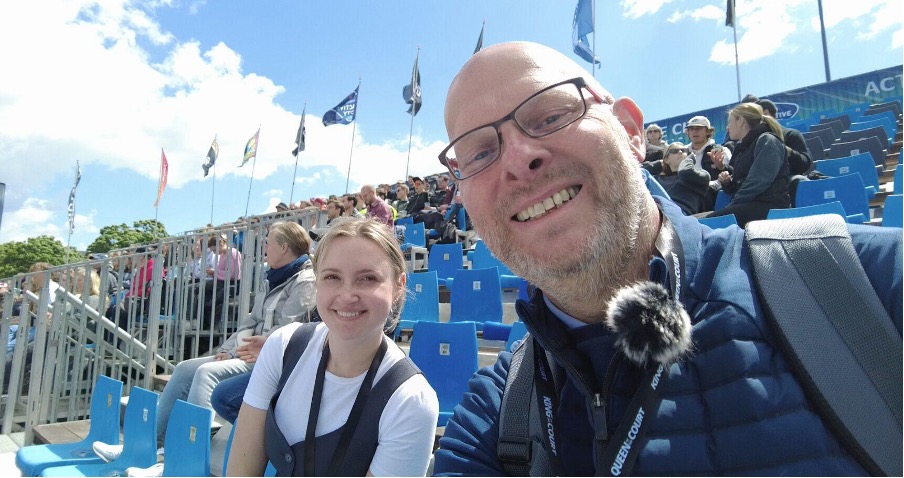
Two Neurofactor researchers in the stands during an outdoor sports event
ClientSportworx

The case at a glance

2
sports events visited: Hamburg and Utrecht
4
central behavioural themes mapped
2
research lines: observation and AI attention analysis

The starting point

A conversation after Festivak became the starting point

The contact followed the presentation by Martijn den Otter and Melissa van Eerden at Festivak in November 2024. Sportworx recognised the idea that visitor behaviour at events is largely unconscious, and that small environmental factors decide whether someone notices, considers or buys something.

At a sports event, the sport takes centre stage. Food, drink and merchandise compete with the match, with crowds, with limited time and with the attention of the people someone came with. Sportworx wanted to understand what holds visitors back, without relying on assumptions based on what people say afterwards.

The central question

How can visitors at sports events be helped more deliberately to discover and buy merchandise, food and drink?

Research on site

Observing where the behaviour actually happens

Hans Wognum and Melissa van Eerden visited two events, in Hamburg and in Utrecht. They observed visitor behaviour in the areas around food, drink and merchandise, and recorded which moments attracted attention and which moments caused hesitation or drop-off.

Behaviour and visitor flows
How do visitors move across the site, where do bottlenecks appear and which spots are consistently skipped?
The environment around food and merchandise
How are points positioned in relation to walking routes, queues and places where people linger?
Visibility of products and communication
What is recognisable from a distance, and what only becomes clear once someone is already at the counter?
Mental and physical sales barriers
Which uncertainty, crowding or lack of clarity holds visitors back before they make a choice?
Visual attention
An AI-supported analysis was used to predict which visual elements are likely to receive attention first.

The observations describe what was seen at these two events. They are intended as a directional behavioural audit, not as statistical research.

The insights

Four barriers that shape buying behaviour

The observations and the attention analysis came together in four themes. Each theme describes what can hold visitors back and which adjustments can lower that barrier.

A

Visibility and routing

Closed sightlines and unclear entrances make it hard for visitors to judge what is happening behind a wall or a corner. People who cannot see what is on offer, or who are unsure whether they are welcome, are more likely to walk on. The absence of visible activity by other visitors also removes the social confirmation that makes a choice easier.

Recommendations

  • Open up sightlines so the offer is visible from a distance
  • Create a recognisable, inviting entrance
  • Support routing with colour and arrows
  • Place visible activity or ambassadors at the point of sale
B

Choice overload

A wide range of products, colours and variants looks complete, but makes choosing harder. When visitors have little time and face many stimuli, postponing becomes the easiest option. A clearer offer helps them reach a suitable choice faster.

Recommendations

  • Highlight a limited number of products at a time
  • Group products logically, for example by use or audience
  • Introduce visual hierarchy in the presentation
  • Make choices easier to compare
C

Price communication

A dominant price list above the counter draws attention strongly towards cost, before visitors have properly seen the product. The decision then becomes mainly a price decision. Placing price information closer to the product helps people weigh value and price together.

Recommendations

  • Show prices closer to individual products
  • Put visual emphasis on the product and its value
  • Apply anchoring and framing where appropriate
  • Consider making the currency symbol less dominant
D

Sensory cues

Smell, tasting and visible products give visitors information that no sign can convey. Such cues can attract attention and support the experience of a product, especially in an environment where many things compete for attention at once.

Recommendations

  • Make aroma and preparation visible and noticeable
  • Show products instead of only naming them
  • Enable tasting or trying out where possible
  • Align sensory cues with the walking route

From observation to application

What Sportworx can do with these insights

The audit produced a set of concrete starting points for making the buying environment at events simpler and more inviting, step by step.

  • Make visitor flows easier to understand
  • Present merchandise more clearly
  • Improve price communication
  • Make food, drink and products stand out earlier
  • Make the buying environment simpler and more inviting

These are recommendations from this specific audit. No claim is made about changes already implemented or revenue growth achieved.

What this means for other organisations

Small adjustments remove unnecessary barriers

What applies at a sports event applies in many places where people make choices in a short space of time. The gain often lies not in more products or more communication, but in removing confusion, hesitation and unnecessary choices from the environment itself.

Sports eventsFestivalsRetail environmentsHospitalityTemporary points of saleVisitor experiences

Which barriers shape the behaviour of your visitors?

Neurofactor makes visible what people notice, feel and do - and translates those insights into concrete improvements.