
Measure brain response where the experience actually happens.
Real-world EEG, also known as mobile EEG, can help reveal response patterns during real environments, journeys, live experiences and physical contexts.
Neurofactor uses mobile EEG in neuromarketing and consumer neuroscience research when the experience depends on context, movement, route, environment or real-world timing.
Real-world EEG / mobile EEG for neuromarketing research.
Not sure if mobile EEG fits your context? Start with the research question →Mobile EEG depends on the setup. The research question defines whether real-world measurement is suitable.
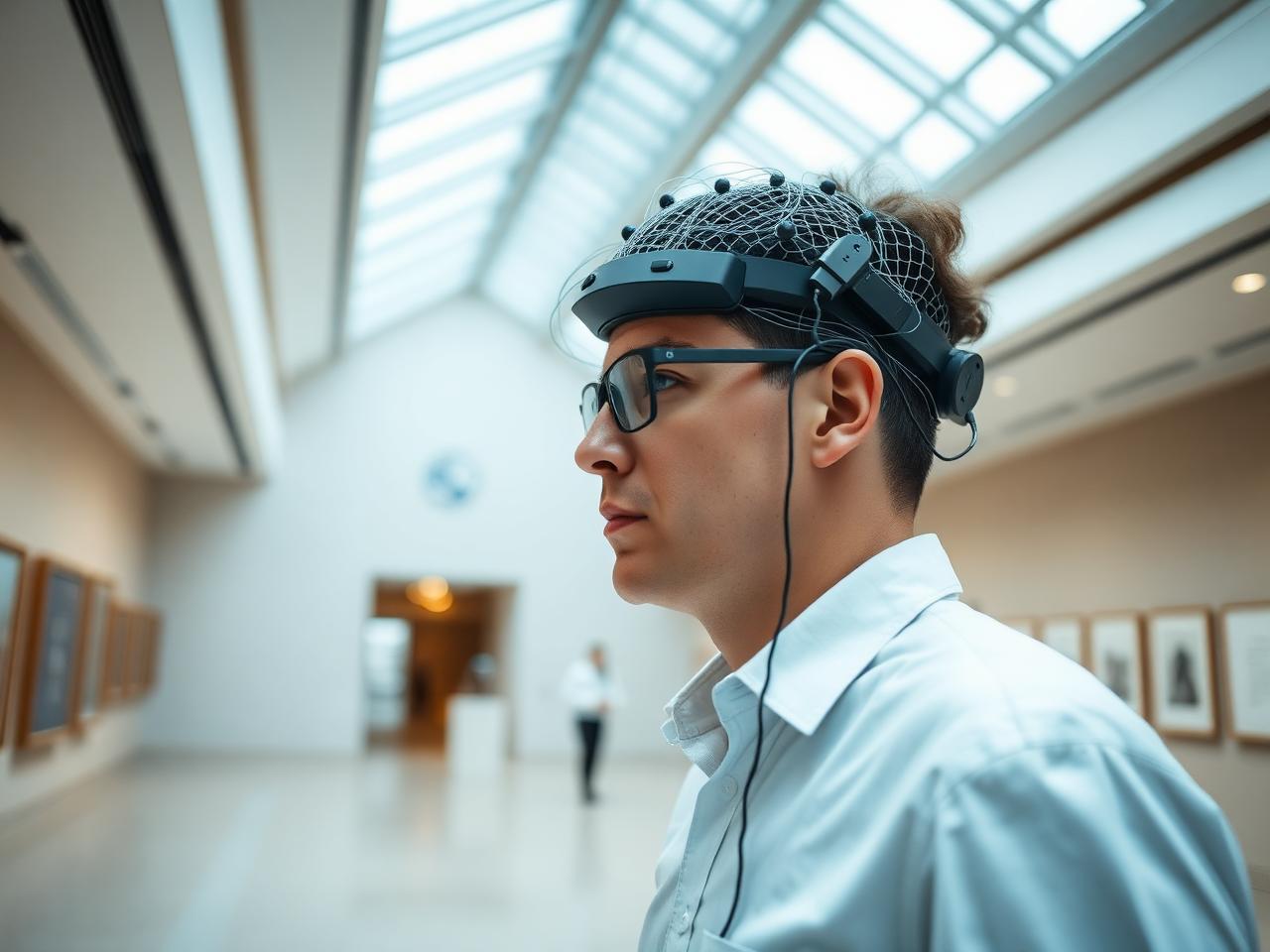
EEG can move beyond the lab when the setup supports reliable measurement.
Some experiences cannot be fully understood when they are removed from their environment. A premium drive, museum visit, showroom route, service journey, live event or extreme experience may depend on movement, context, timing and physical surroundings.
Mobile EEG can help study response patterns during those real-world experiences, as long as the research question, context, signal quality, participant safety and interpretation design support reliable measurement.
Real-world EEG is valuable when the environment is part of the experience you need to understand.
What is real-world EEG / mobile EEG?
Real-world EEG, or mobile EEG, uses portable EEG technology to record patterns in brain activity while people experience real environments, routes, events, products or physical contexts.
In neuromarketing and consumer neuroscience research, mobile EEG can help interpret response patterns during real-world experiences when the setup supports reliable measurement.
Mobile EEG is EEG applied in context. It is not a different brain measurement: it is the same method, designed for the field.
- Portable EEG technology
- Sensors on the scalp
- Real-world environments
- Routes and journeys
- Live experiences
- Physical context
- Response patterns over time
- Research design and interpretation
What mobile EEG can help reveal in real-world experiences.
Depending on the setup, mobile EEG can help interpret how people respond as they move through a real environment, route or live moment. The interpretation always depends on the research question, context and signal quality.
Attention during a route
Patterns related to attention as people move through an environment, exhibition, showroom or service journey.
Static measurement misses where attention rises and drops along the actual route.
Improve route design, signage, sensory cues and key moments.
Cognitive processing over time
Patterns related to how the brain processes information across the full experience.
Real-world experiences create load that cannot be fully recreated on a screen.
Simplify or pace moments that create overload or disengagement.
Focus and engagement
Patterns of sustained mental engagement during a live or physical experience.
Drops in focus reveal where the experience loses people.
Refine pacing, sequencing and signature moments.
Approach/avoidance patterns
Frontal-asymmetry patterns interpreted in research as approach or avoidance tendencies.
Shows whether real-world moments pull people in or push them away.
Adjust environment, tone, framing or friction points.
Stress-related response
Patterns that, in research context, may indicate elevated arousal, stress or pressure.
Some experiences depend on arousal; others lose value when stress climbs.
Redesign waiting, pressure, density or safety-perception moments.
Moments of friction or load
Patterns suggesting effort, hesitation or disengagement during the journey.
Real-world friction often hides in transitions, waiting and choice points.
Reduce complexity, clarify choices and smooth transitions.
Response to sensory cues
In real-world environments, light, sound, movement, space, material, speed, pressure or social context can influence response.
Sensory context is not background; it shapes the actual experience.
Improve experience design, route planning, sensory cues, timing, environment or service moments.
Differences between environments or groups
Comparing response patterns across routes, versions or target groups.
Two environments, or two audiences, can respond very differently to the same brief.
Choose the environment or version that better fits the intended response, per profile.
Mobile EEG is most useful when response changes over time and context matters.
What mobile EEG can reveal, and what real-world conditions can limit.
Mobile EEG is powerful when applied with care. The page must be equally honest about what real-world conditions can limit, so claims stay credible.
- Response patterns during real experiences
- Attention over time
- Processing during routes or environments
- Engagement and focus patterns
- Approach/avoidance patterns
- Moments of friction or load
- Differences between journeys, concepts or target groups
- Signal quality in noisy environments
- Movement tolerance and equipment fit
- Participant safety and measurement duration
- Context control and external interference
- Interpretation certainty in unique field conditions
- Mobile EEG does not read thoughts or diagnose medical conditions
Real-world EEG depends on the research question, context, movement, signal quality, participant safety and interpretation design.
When should you use real-world EEG?
Real-world EEG is most relevant when the experience depends on the environment, movement, route or live context, and the research question cannot be fully answered in a static lab.
The experience only makes sense in the real environment.
How do people respond while the experience is actually happening?
Mobile EEG keeps the environment intact as part of the stimulus.
The route, movement or setting is part of the response.
Where in the route does attention, focus or friction appear?
Mobile EEG can map response across the live route.
A premium experience needs to be measured while it happens.
Does the moment create premium perception, attention and approach?
Mobile EEG adds a real-time evidence layer beyond self-report.
A visitor journey depends on physical context.
Which moments visitors notice, process and respond to?
Mobile EEG can help reveal real visitor response patterns.
A museum, showroom, vehicle or service environment shapes the response.
How does the environment influence attention, engagement or stress?
Mobile EEG can interpret response inside the environment itself.
A high-arousal context cannot be recreated authentically in a lab.
How does response unfold under real-world pressure or stimulation?
Mobile EEG can support careful research in unusual contexts when feasible.
A journey may create attention, stress, focus, friction or approach/avoidance over time.
How does response evolve across the full experience?
Mobile EEG can track response dynamics across time.
The team needs response in context, not only to a screen-based stimulus.
What happens when people experience the real moment itself?
Mobile EEG keeps the experience whole during measurement.
Real-world EEG is not always better than lab EEG. It is better when the research question needs real-world context.
Discuss a research setupReal-world EEG can support experiences that cannot be fully understood on a screen.
These are the contexts where the environment shapes the response, and where mobile EEG can add a real-time response layer when the setup supports it.
Premium driving experiences
Premium drives, test rides and high-value vehicle moments.
Which moments create attention, excitement, focus, stress-related response or approach/avoidance during the real drive?
Museum and visitor journeys
Exhibitions, route design and visitor experience research.
Which moments do visitors notice, process and respond to?
Showrooms and product experiences
Showrooms, brand environments and physical product moments.
Which moments create premium perception and engagement?
Retail environments
Store routes, shelf moments and in-store experience.
Where does attention rise, drop or shift along the route?
Mobility and travel journeys
Stations, transfers, waiting areas and travel moments.
Where does cognitive load, friction or disengagement appear in the route?
Public spaces
Squares, civic spaces, wayfinding and route experience.
Which moments support orientation, comfort and approach response?
Service journeys
Service moments, onboarding, support and waiting.
Where in the service moment does friction or load appear?
Live events
Live events, demos, presentations and brand experiences.
Which moments hold attention and create response?
Sports and physical experiences
Physical product testing and active experience moments.
How does response evolve during the physical experience?
Extreme research contexts
Unusual or high-arousal research contexts, when feasibility allows.
How does response unfold under real-world pressure?
Hospitality environments
Hotels, restaurants and hospitality journeys.
Which moments shape comfort, trust and premium perception?
Workplace and wellbeing
Workplace routes, focus moments and wellbeing environments.
Where does focus, recovery or stress appear in the day?
If the environment shapes the experience, the environment may need to be part of the research.
Lab EEG and real-world EEG answer different questions.
Lab EEG and mobile EEG are not competitors. They are different setups of the same method, selected around what the research question really needs.
The right setup depends on what you need to understand.
How Neurofactor designs real-world EEG research.
Neurofactor starts by testing whether the real-world context is suitable for EEG measurement. Some environments are; others are not.
The team defines the research question, environment, route, participant group, safety conditions, equipment setup, signal quality requirements and interpretation framework before the study runs.
The goal is not to measure everywhere. The goal is to measure where the setup can produce meaningful response data.
- 1Define the research question.
- 2Assess whether real-world EEG is suitable.
- 3Map the environment, route or live context.
- 4Define participant safety and measurement conditions.
- 5Design the mobile EEG setup.
- 6Measure response patterns during the experience.
- 7Combine EEG with behavioural, market or business data, then translate into decisions.
The setup determines whether real-world EEG is meaningful.
Mobile EEG becomes stronger when combined with the right supporting methods.
Real-world EEG rarely stands alone. It usually adds the real-time response layer to a wider research design built around the live context.
Mobile EEG + eye tracking
Connecting where people look in the environment with how they process moments during the experience.
Mobile EEG + behavioural observation
Connecting response patterns with movement, route behaviour, hesitation, interaction and visible actions.
Mobile EEG + surveys or interviews
Comparing real-time response with what people can explain afterwards.
Mobile EEG + profiling
Understanding why different groups respond differently in the same environment.
Mobile EEG + association research
Connecting real-world response with brand, environment, product or experience associations.
Mobile EEG + business or operational data
Connecting response patterns to dwell time, route choice, purchase behaviour, service performance or operational outcomes.
Real-world EEG explains more when it is connected to what people saw, did, said and decided.
What you receive from real-world EEG research.
The output is not raw mobile EEG data. It is interpreted evidence for better real-world experience decisions.
Response timeline
How response evolves across the real experience.
Moments of attention and engagement
Where focus, engagement or signature moments occur in the route.
Stress and friction signals
Where pressure, load or friction appear during the experience.
Approach/avoidance interpretation
Where the environment pulls people in or pushes them away, in research context.
Route or journey patterns
How response shifts across the full live journey.
Environment or sensory interpretation
How sensory cues, space and context influence response.
Target-group or version differences
How different audiences or variants respond in the same environment.
Method-combination findings
Findings combining mobile EEG with eye tracking, observation, profiling or business data.
Feasibility and limitation notes
What the setup did and did not allow, kept honest.
Decision-ready recommendations
What to refine in experience, route, environment, service or product.
The output is interpreted evidence for real-world experience decisions, not raw measurement.
Applied in real-world contexts where the environment matters.
Mobile EEG has been applied at Neurofactor across premium driving, cultural and physical product contexts, when the setup supports careful, responsible measurement.
McLaren / Louwman Exclusive premium driving
Shows how response can be studied during a physical, high-value, real-world driving experience.
Girl with a Pearl / Mauritshuis
Shows how real-world context can matter in museum and visitor experience research.
Skydive EEG research
Shows Neurofactor's ability to design EEG research in unusual and high-arousal real-world contexts, when the setup supports it.
Pilot Cycles premium gravel bike
Shows how EEG can support product and experience research outside a static lab setting.
Mobility, service or environment research
Shows how response can change across a route or service context.
See how mobile EEG supports real-world research and business decisions.
Use cases show feasibility and relevance. They do not claim perfect measurement in every real-world condition.
Want to measure response in the real experience?
If your experience depends on movement, route, environment, timing, interaction or physical context, mobile EEG may help reveal response patterns that a lab setup cannot fully capture. You do not need to know whether mobile EEG is suitable yet. Start with the research question. Neurofactor can help define the setup.
Mobile EEG depends on the setup. The research question defines whether real-world measurement is suitable.
Real-world EEG depends on the research question, context, movement, signal quality, participant safety and interpretation design.